Generating Surface Crack Patterns
Abstract
We present a method for generating surface crack patterns that appear in materials such as mud, ceramic glaze, and glass. To model these phenomena, we build upon existing physically based methods. Our algorithm generates cracks from a stress field defined heuristically over a triangle discretization of the surface. The simulation produces cracks by evolving this field over time. The user can control the characteristics and appearance of the cracks using a set of simple parameters. By changing these parameters, we have generated examples similar to a variety of crack patterns found in the real world. We assess the realism of our results by a comparison with photographs of real-world examples. Using a physically based approach also enables us to generate animations similar to time-lapse photography.
Supplemental Material
Full Movie (49 Mb)
Video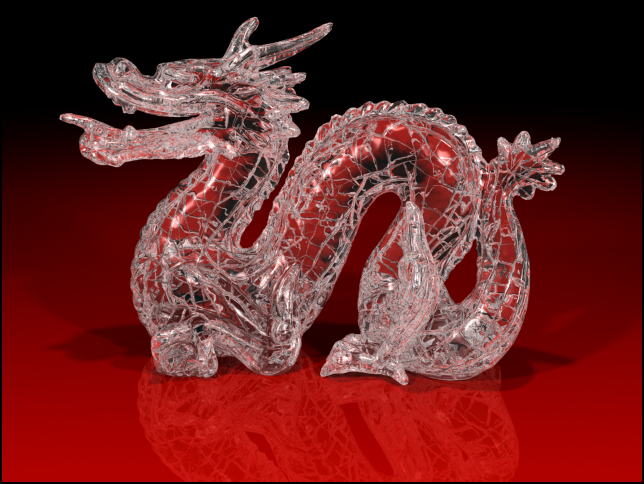
Crackle Glass Dragon
Generated by uniform shrinkage of the surface.
Open Link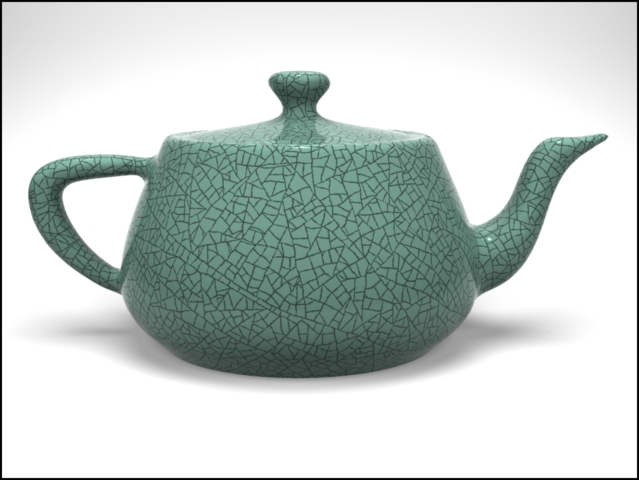
Crackle Glaze Teapot
Generated by initializing the stress field to uniform shrinkage and evolving it by adding uniform tension.
Open Link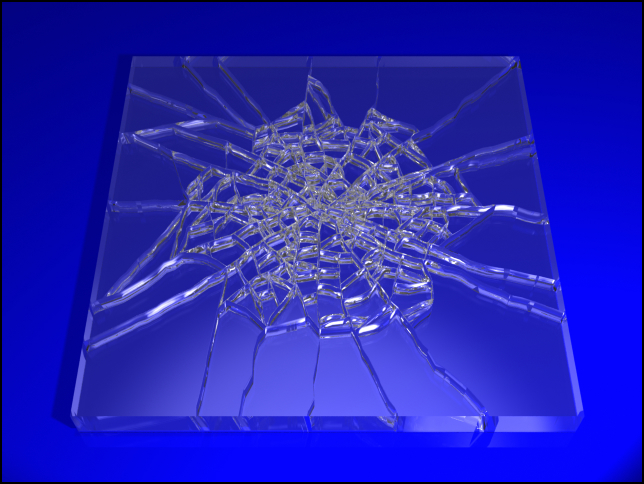
Glass
Generated from initializing the stress field with a pattern modeling impacts in flat glass. The field is evolved by the relaxation process, causing the cracks to propagate.
Open Link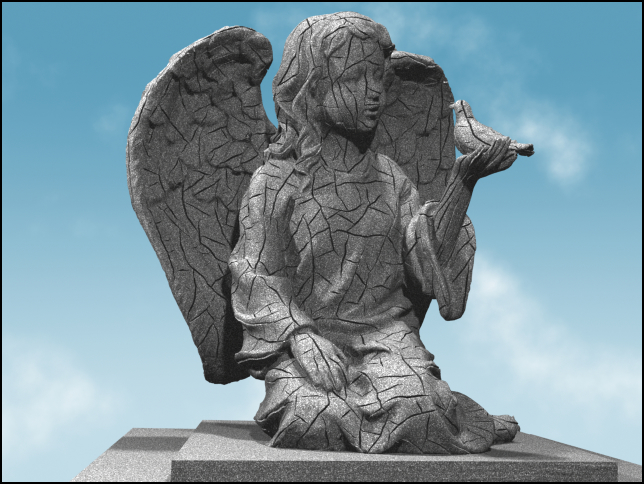
Artistic Effect
As an artistic effect, we initialized the stress field to uniform tension with some bias to crack in the principle curvature directions. The result of using this heuristic is demonstrated by the vertical cracks of the angel's arm and the cracks following the folds of fabric.
Open Link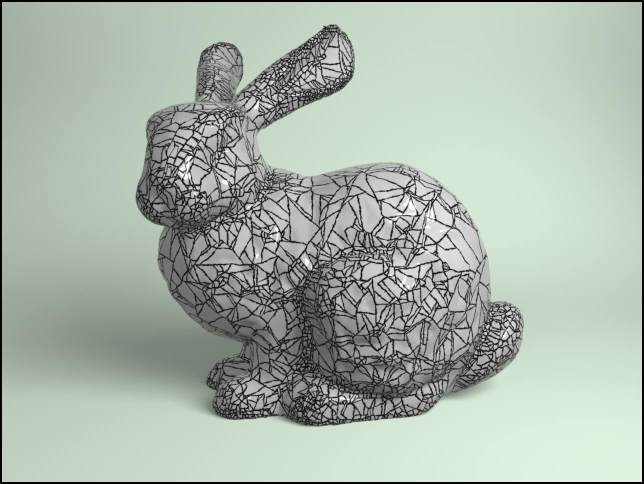
Curvature Controlled Crack Formation
Curvature can be used to control crack formation, as demonstrated here. Notice the high concentration of cracks around areas of high curvature, such as the ears, neck and leg.
Open Link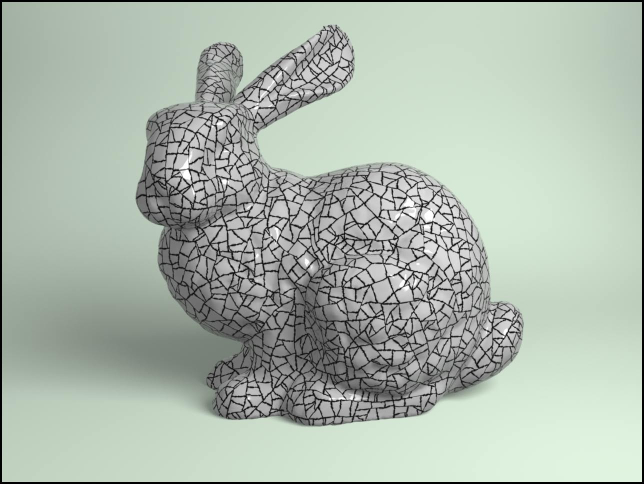
Uniform Shrinkage
This image was generated using only uniform shrinkage of the surface, resulting in more evenly spaced cracks than the previous image.
Open Link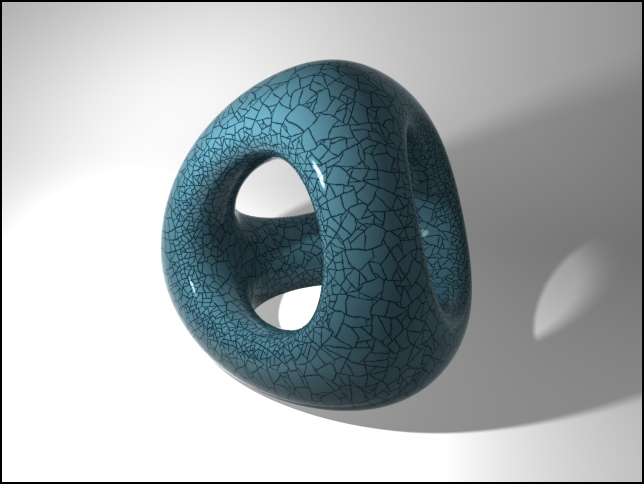
Another Artistic Effect
Another example demonstrating an artistic effect achieved by using curvature to bias the concentration of cracks.
Open Link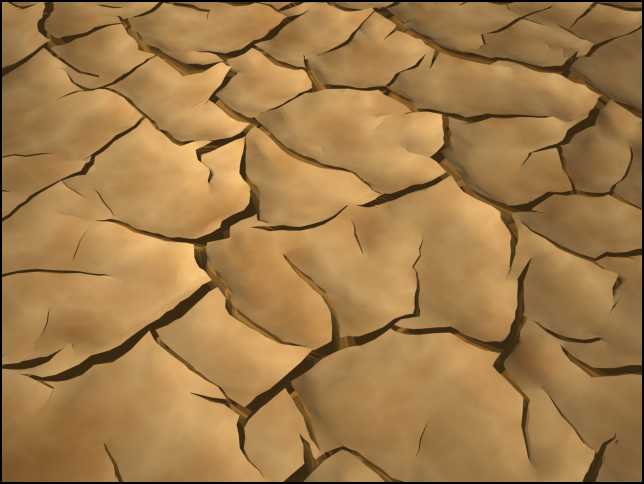
Curling Effect
Example of adding a curling effect to the cracked mud example below.
Open Link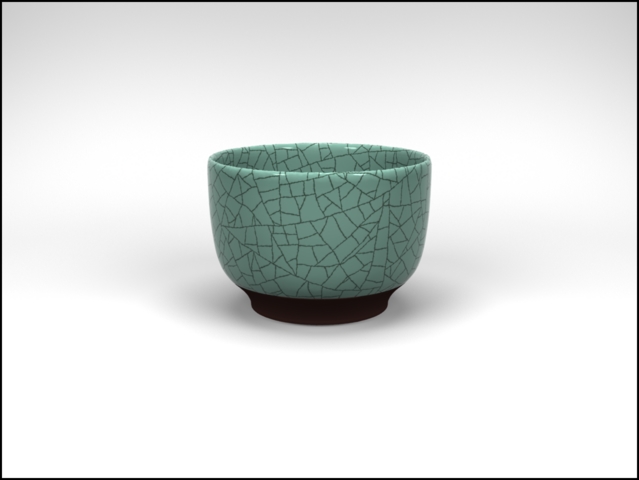
Comparison 1 (Rendering)
A rendered example of a "crackle glaze" cup compared to a photograph. Our algorithm generates this effect by initializing the stress field to uniform shrinkage over the surface and evolving it with uniform tension.
Open Link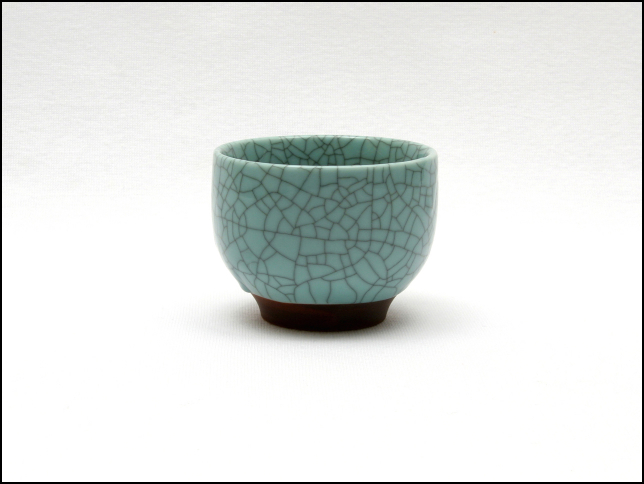
Comparison 1 (Photograph)
Open Link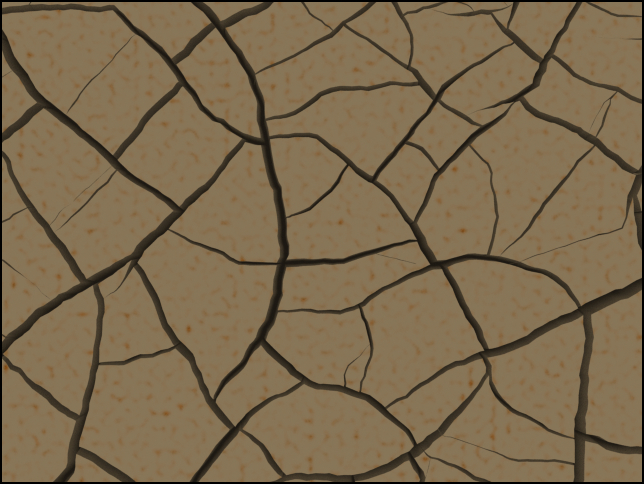
Comparison 2 (Rendering)
A rendered example of dried mud compared to a photograph. We used uniform shrinkage of surface and set alpha = 0.85 to propagate the cracks further.
Open Link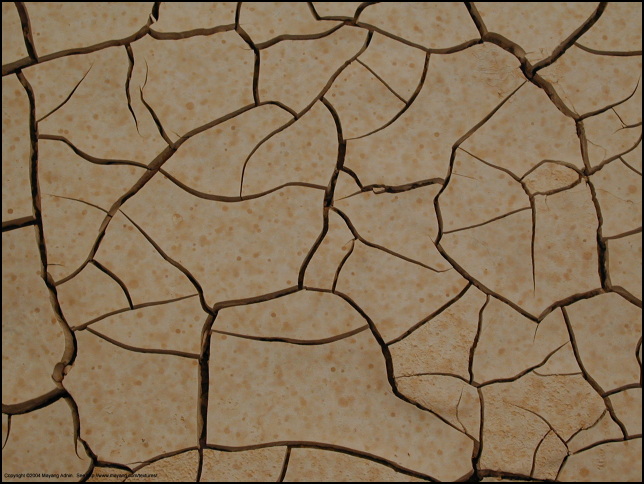
Comparison 2 (Photograph)
Photograph copyright Mayang Adnin
Open Link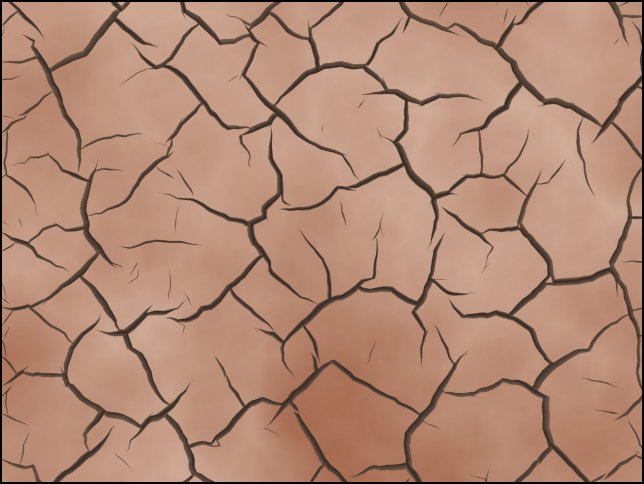
Comparison 3 (Rendering)
As in the example above, we used uniform shrinkage of the surface, but changed the parameter alpha = 0.5 to demonstrate controlling the crack propagation.
Open Link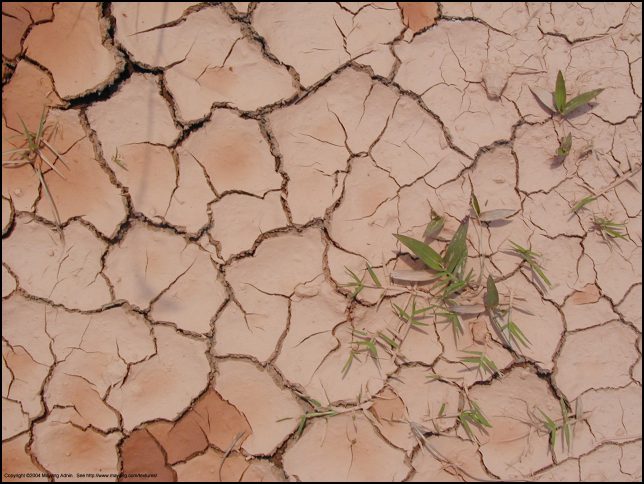
Comparison 3 (Photograph)
Photograph copyright Mayang Adnin
Open LinkCitation
Hayley N. Iben and James F. O'Brien. "Generating Surface Crack Patterns". In Proceedings of the ACM SIGGRAPH/Eurographics Symposium on Computer Animation, pages 177–185, Sept 2006.